Essential Electronics Lab Tools for Educational Institutions

Electronics has become a foundational discipline for understanding the modern technological world. From smartphones and electric vehicles to renewable energy systems and smart homes, electronics lies at the core of nearly every innovation shaping our society.
For this reason, educational institutions increasingly recognize the importance of providing students with hands-on experience in electronics laboratories. While theoretical knowledge provides the conceptual framework, it is through experimentation and practical exploration that students truly develop engineering intuition.
However, building an effective electronics laboratory requires more than simply purchasing equipment. Institutions must carefully select tools that are:
- Appropriate for the students' educational level
- Safe to use in a classroom environment
- Aligned with learning objectives and curriculum goals
A laboratory designed for elementary students should spark curiosity and encourage experimentation, while university labs must support advanced engineering design, signal analysis, and system development.
This guide presents a detailed overview of the essential hardware tools required for electronics education, organized into two major categories:
- Hardware for Elementary and Secondary Education — safe, intuitive tools that build foundational understanding
- Hardware for Higher Education (Universities and Colleges) — professional-grade instruments and platforms for engineering students
Each section explores the tools educators should consider, explains what they are used for, and describes how they contribute to effective learning.
Hardware for Elementary and Secondary Education
At the elementary and secondary levels, electronics education should focus on developing curiosity, intuition, and fundamental scientific thinking. Students at this stage are beginning to understand how electricity works and how electronic systems interact with the real world.
The equipment used in these labs should therefore be:
- Safe and low-voltage
- Easy to use
- Visually intuitive
- Durable for repeated classroom use
Rather than emphasizing complex theory, educational tools should help students observe cause-and-effect relationships in circuits.
Basic Electronic Components
Electronic circuits are built from a relatively small set of fundamental components. Understanding how these building blocks work is the first step toward mastering electronics.
Introducing students to these components allows them to understand:
- How electrical energy flows
- How signals are controlled
- How devices respond to changes in current or voltage
Resistors
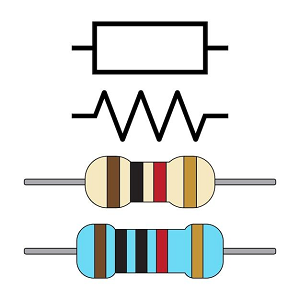
A resistor is one of the most basic and widely used components in electronics. Its primary function is to limit or regulate the flow of electric current within a circuit.
Resistors operate according to Ohm's Law, which describes the relationship between voltage, current, and resistance. Teaching this principle through hands-on experiments allows students to see how adjusting resistance affects current flow.
In educational settings, resistors are often used to demonstrate concepts such as:
- Current limitation
- Voltage division
- Power dissipation
- Protection of sensitive components
One of the most common classroom experiments involves connecting a resistor in series with a Light Emitting Diode (LED). Without the resistor, the LED would receive too much current and quickly burn out.
Another valuable learning activity involves building voltage divider circuits, which demonstrate how multiple resistors can split voltage into different levels — a concept widely used in sensor systems.
Resistors are typically identified by color-coded bands, which also provides a practical way for students to learn component identification and electronics standards.
Capacitors
Capacitors are components that store electrical energy temporarily in an electric field between two conductive plates separated by an insulating material. Although the concept may initially seem abstract, capacitors provide excellent demonstrations of time-dependent electrical behavior.
When connected to a power source through a resistor:
- The capacitor gradually charges until it reaches the supply voltage.
- When disconnected, it discharges, releasing stored energy.
This behavior allows educators to teach students about:
- Energy storage
- Charging and discharging curves
- Time constants in RC circuits
- Signal filtering
A common classroom demonstration is a delay circuit, where a capacitor causes an LED to turn on or off after a short delay. Such demonstrations help students visually understand how circuits control timing and energy flow.
Light Emitting Diodes (LEDs)
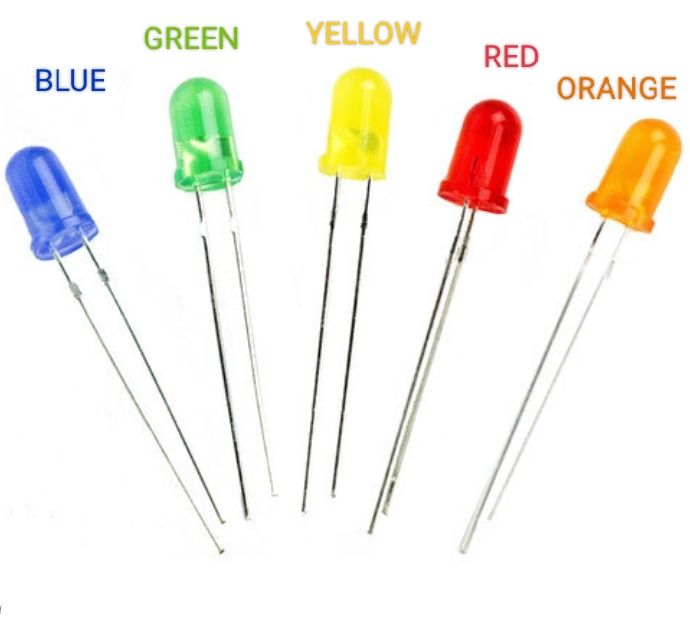
Light Emitting Diodes (LEDs) are semiconductor devices that emit light when electric current flows through them. They are among the most effective teaching components because they provide instant visual feedback:
- If the circuit works → the LED lights up
- If the circuit is incorrect → the LED stays off
This immediate feedback makes LEDs extremely useful for beginners learning circuit construction.
LEDs also help students understand:
- Electrical polarity
- Semiconductor behavior
- Circuit troubleshooting
- Digital logic indicators
Common beginner projects include:
- Indicator lights
- Traffic light simulations
- Basic electronic games
- LED blinking circuits
Switches and Buttons
Switches are mechanical components that allow users to open or close an electrical circuit. They serve as the interface between human interaction and electronic systems.
Common types used in classrooms include:
- Push buttons
- Toggle switches
- Slide switches
Through simple experiments, students learn how switches control power flow and how circuits respond to user actions. For example, students might build a circuit where pressing a button turns on an LED or activates a buzzer, introducing the concept of interactive electronics.
Circuit Building Platforms
Once students understand individual components, the next step is learning how to combine them into complete circuits. Circuit-building platforms allow students to experiment, modify designs, and observe component interactions.
Breadboards
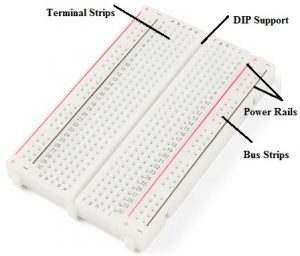
Breadboards are one of the most important tools in electronics education. They are reusable prototyping boards that allow components to be connected without soldering, making them ideal for classroom environments.
Inside a breadboard are metal contact strips that connect rows of holes together. By inserting components and wires, students can quickly assemble circuits.
Common activities include:
- LED circuits
- Sensor experiments
- Voltage divider demonstrations
- Simple logic circuits
Breadboards encourage experimentation and iterative learning, which are essential aspects of engineering education.
Jumper Wires and Alligator Clips
Electrical connections between components are made using jumper wires or alligator clip cables. These tools allow students to build circuits quickly and modify them without damaging components.
Color-coded jumper wires help students distinguish between:
- Power lines
- Ground connections
- Signal paths
For younger students, brightly colored wires make circuit layouts easier to follow visually.
Educational Microcontroller Platforms
Modern electronics is closely connected to programming and digital control systems. Introducing students to microcontrollers allows them to build intelligent electronic systems that can sense and react to their environment.
Arduino Development Boards
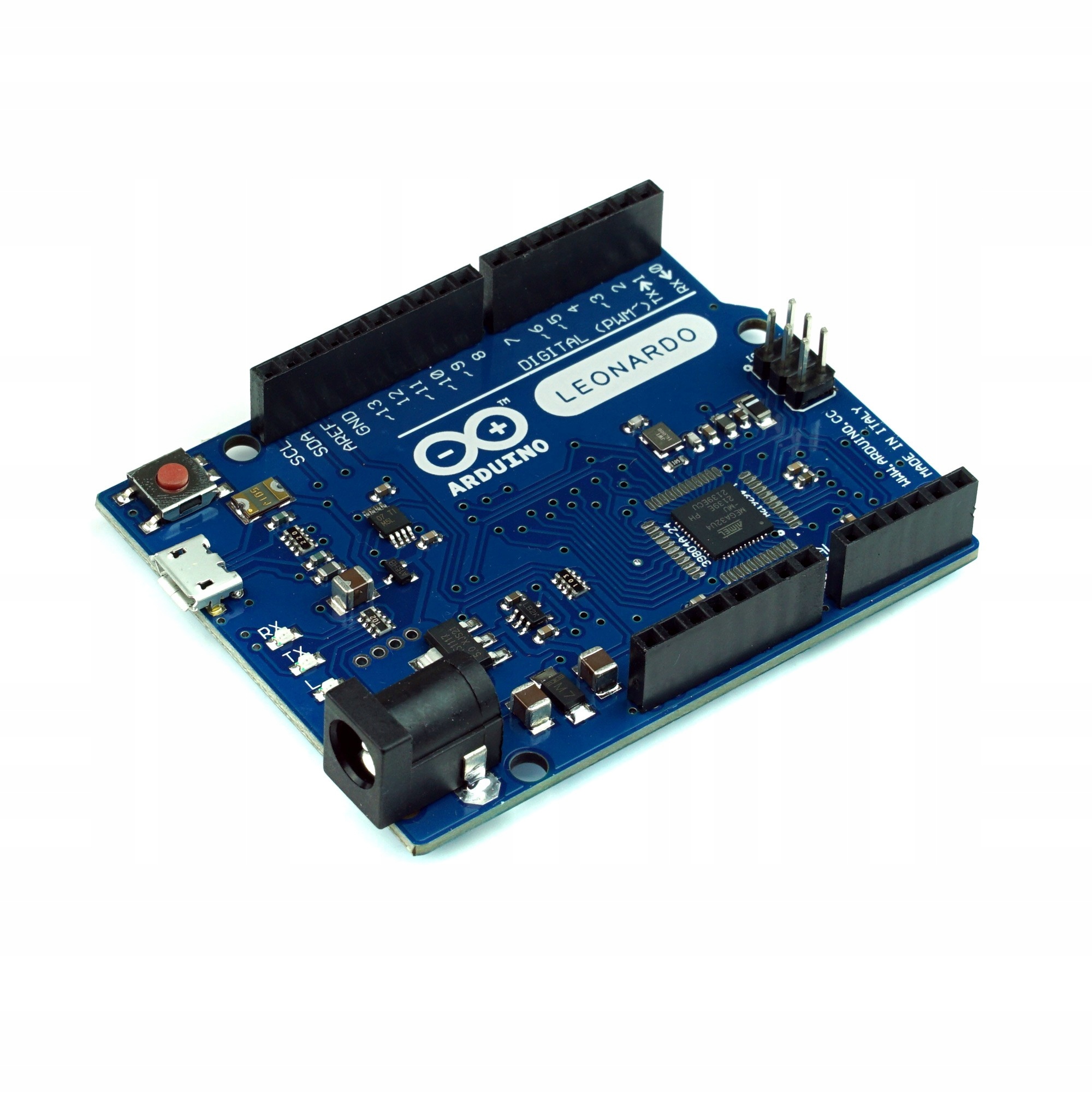
Arduino boards are among the most widely used platforms for electronics education. An Arduino board contains a programmable microcontroller capable of reading sensor inputs and controlling outputs such as LEDs, motors, and displays.
Using the Arduino programming environment, students can write simple programs that interact with hardware. Popular educational projects include:
- LED blinking patterns
- Temperature monitoring systems
- Automatic plant watering systems
- Motion detection alarms
- Mini robotics projects
These projects combine electronics, programming, and problem-solving, helping students develop interdisciplinary skills.
Educational Sensor Kits
Sensor kits expand project possibilities by allowing circuits to interact with the physical environment. Common educational sensors include:
- Temperature sensors
- Light sensors
- Distance sensors
- Sound sensors
- Motion detectors
By connecting sensors to microcontrollers, students learn how electronic systems collect and process real-world data. For example, a light sensor may automatically adjust LED brightness based on ambient lighting, demonstrating automation principles.
Measurement and Safety Equipment
Developing strong laboratory skills requires students to learn how to measure, test, and troubleshoot circuits. Measurement instruments allow students to verify theoretical predictions and understand real-world electrical behavior.
Digital Multimeters
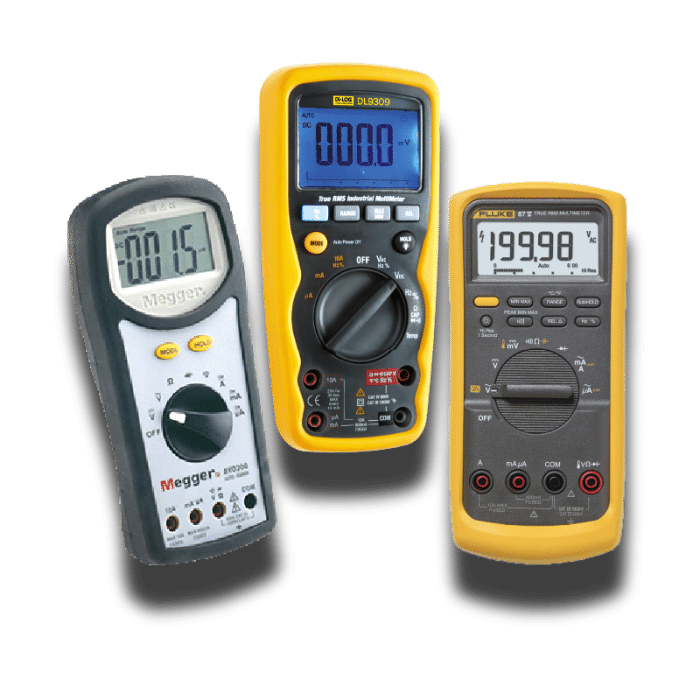
The digital multimeter is one of the most versatile instruments in electronics. It allows users to measure:
- Voltage
- Current
- Resistance
- Electrical continuity
Using multimeters helps students diagnose circuit issues and confirm whether their designs are functioning correctly.
Low-Voltage Power Supplies
Educational laboratories typically use power supplies ranging from 3 V to 12 V. These provide safe electrical energy for experiments while minimizing risk.
Many classroom power supplies include safety features such as:
- Current limiting
- Short-circuit protection
- Overload protection
Safety Equipment
Safety is a fundamental aspect of laboratory education. Basic safety equipment may include:
- Protective eyewear
- Insulated tools
- Clear labeling of electrical connections
- Emergency power shutoff systems
Teaching safety procedures early helps students develop professional laboratory habits that carry into higher education and industry.
Hardware for Higher Education (Universities and Colleges)
University-level electronics education requires significantly more advanced laboratory equipment. Students are expected to:
- Design complex circuits
- Analyze signals
- Build embedded systems
- Understand communication protocols
University labs must therefore provide professional-grade instruments and development platforms.
Professional Measurement Instruments
Advanced measurement tools allow students to observe and analyze electronic signals with high precision.
Digital Oscilloscopes
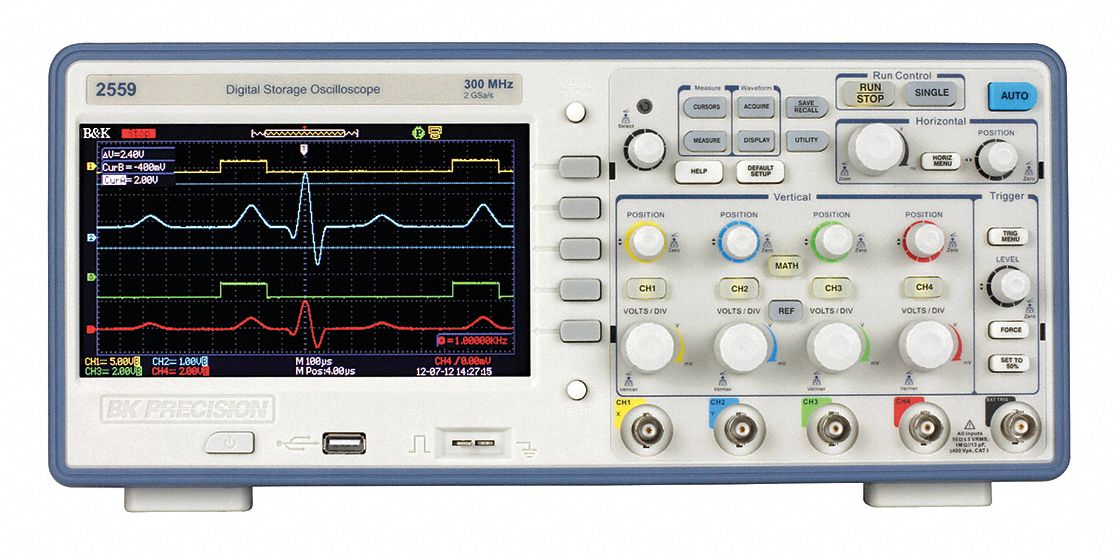
The oscilloscope is arguably the most important instrument in an electronics laboratory. Unlike a multimeter, which measures static values, an oscilloscope displays voltage signals over time.
Students use oscilloscopes to analyze:
- Signal waveforms
- Frequency characteristics
- Noise and interference
- Timing relationships
These instruments are widely used in courses such as:
- Analog electronics
- Digital systems
- Communication systems
- Power electronics
Function Generators
Function generators produce electrical test signals used to stimulate circuits. Common waveform outputs include:
- Sine waves
- Square waves
- Triangle waves
- Pulse signals
These signals allow students to test filters, amplifiers, and signal-processing circuits.
Bench Power Supplies
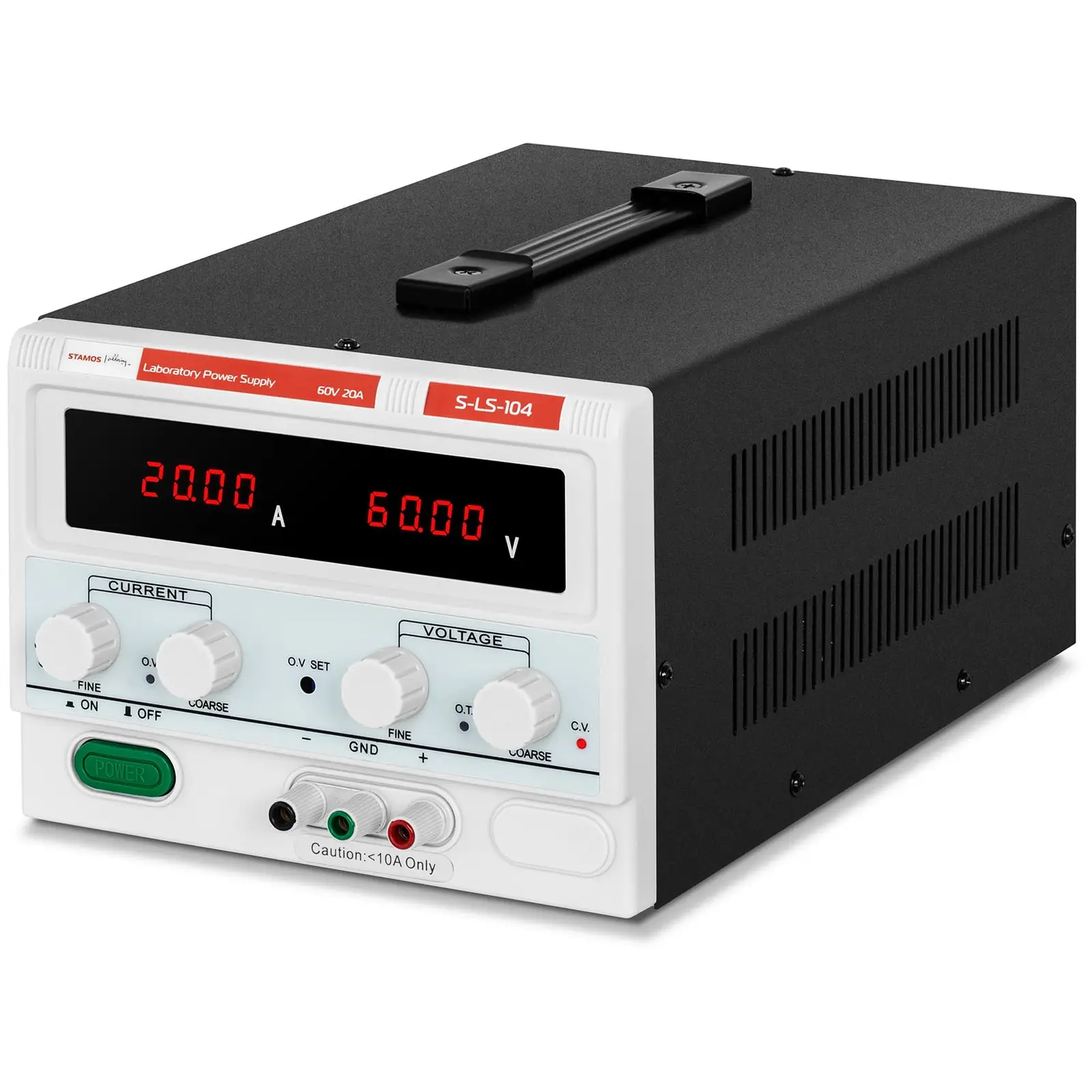
Professional bench power supplies allow precise control over voltage and current. They provide adjustable outputs and protection features such as current limiting.
Students use them to power circuits while monitoring system stability and power consumption.
Advanced Prototyping Equipment
Engineering students must move beyond temporary prototypes and learn how to build permanent electronic systems.
Soldering Stations
Soldering stations are used to attach electronic components to printed circuit boards (PCBs). They include temperature-controlled soldering irons that allow precise heat management.
Students learn skills such as:
- Component placement
- Solder joint quality inspection
- PCB repair and modification
PCB Prototyping and Fabrication Tools
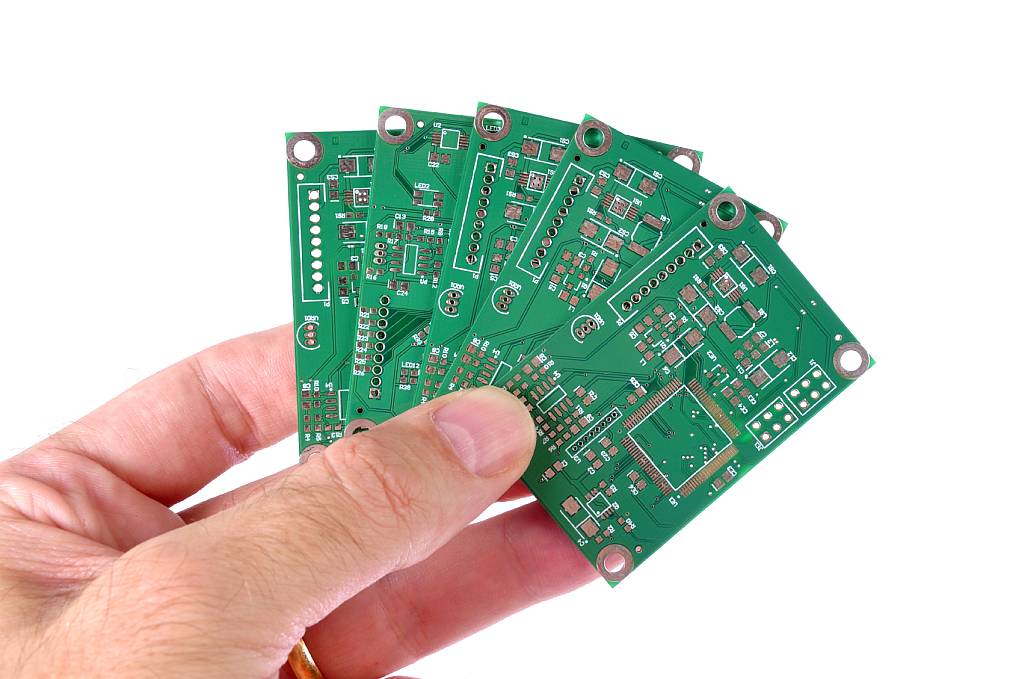
Printed Circuit Boards (PCBs) provide the structural foundation for modern electronics. University labs often include tools for:
- Designing PCB layouts
- Fabricating prototype boards
- Assembling hardware systems
Students learn how to transform circuit schematics into manufacturable hardware.
Embedded Systems Development Platforms
Embedded systems represent one of the fastest-growing areas in electronics and computer engineering. University platforms may include:
- Advanced microcontroller boards
- FPGA development kits
- Single-board computers
These systems allow students to build complex applications such as:
- Robotics systems
- Computer vision devices
- Internet of Things (IoT) platforms
- Autonomous machines
Communication and Signal Analysis Tools
Modern electronic systems rely heavily on digital communication between devices. Universities equip their labs with specialized tools to analyze communication signals.
Examples include:
- Logic analyzers
- Protocol analyzers
- RF measurement equipment
Students study protocols such as:
- UART
- SPI
- I²C
- CAN
- Ethernet
Understanding these technologies prepares students for careers in:
- Embedded systems
- Telecommunications
- Automotive electronics
- Industrial automation
Conclusion
A well-designed electronics laboratory is an investment in the future of technological education.
For younger students, laboratory tools should emphasize exploration, safety, and intuitive understanding. Simple components, breadboards, and beginner-friendly microcontrollers help spark curiosity and build foundational knowledge.
At the university level, laboratories must evolve into professional engineering environments equipped with advanced instruments, prototyping tools, and embedded system platforms.
By carefully selecting the right hardware tools for each educational level, institutions can create learning environments that:
- Inspire creativity
- Foster problem-solving skills
- Prepare students for the rapidly evolving world of technology
